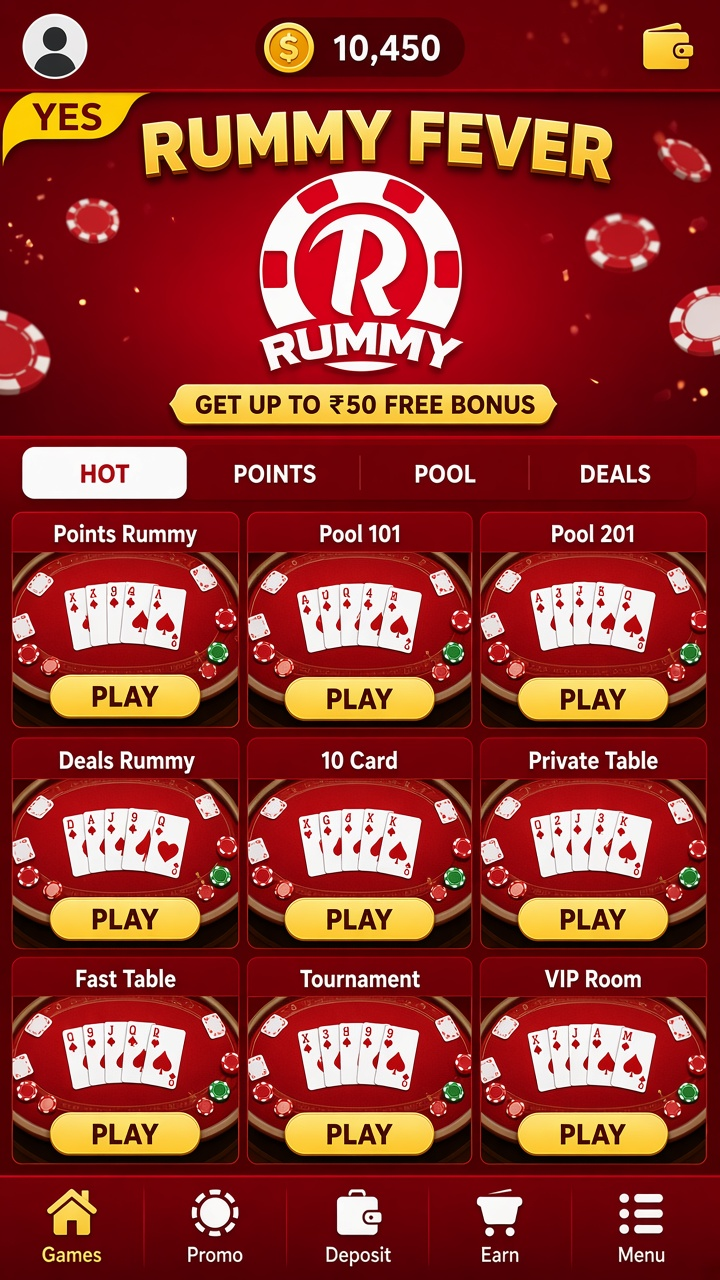

What Rummy Fever is
Rummy on Rummy Fever follows rules most players already know, so the learning effort goes into table selection and discard reading rather than new mechanics.
That is the whole pitch — a clear entry point, readable rules and a session length you choose yourself.
Inside a session
The round structure is draw-and-discard until someone declares. A valid hand needs at least one pure sequence built without a joker, with the remaining cards grouped into further sequences or sets. An invalid declaration is scored like the worst hand at the table, so patience at the end matters as much as speed in the middle.
Where things sit
The settings worth knowing before a session are sound, notifications, and display preferences; all three sit together in the account menu.
In bullet form:
- Session history under the account menu
- Sound and notification preferences
- Search by title within the lobby
- Result screens with figures in writing
Opening moves
The installer is 85 MB for version 4.0.1. Post-install, the path is short: open, sign in, browse. No separate setup app, no account key import — the defaults carry you.
Setting your own limits
Automatic-play settings, where formats offer them, should carry the same limits you would apply by hand — session caps included. Convenience should not widen exposure.
Account details and checks
Account information lives in one profile section: details, payment routes and verification status. Reviewing it occasionally takes a minute and prevents the slower kind of support ticket.
Before you claim
A ₹50 welcome credit is offered to eligible new accounts. The details that matter — how to activate it, where it can be used, when it expires — sit on the promotion page next to the claim control. Keep expectations straight: credited bonus is not immediately payable cash.
Payment methods and minimums
The app processes withdrawals above ₹150 through UPI and IMPS. Any charges attached to a route are displayed with the request, and each payout is subject to account verification. Arrival is method-dependent; the app deliberately does not promise fixed turnaround times.